GOVERNMENT COLLEGE OF ART AND CRAFT
Nurturing Creativity Since 1864
Excellence In Fine Arts Education
Tradition • Innovation • Creativity
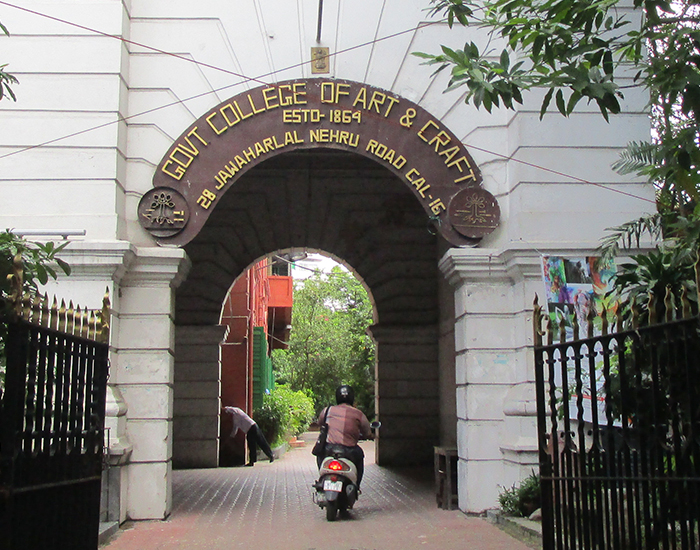
Government College of Art & Craft, Calcutta is one of the oldest and most prestigious institutions dedicated to fine arts education.
Quality Education
We offer a diverse range of programs designed to build strong foundations and inspire excellence.
Experienced Faculty
Our dedicated faculty members guide students with knowledge, mentorship and care.
Vibrant Community
We promote a culture of collaboration, respect and inclusion for all students.
Future Focused
We prepare students with the skills and confidence to lead and make an impact.
-
M.F.A. Part-A: 4th List of Selected Candidates for Verification (2026–2027)
✨ NEW
-
M.F.A. Part-B: 2nd List of Selected Candidates for Verification (2026–2027)
✨ NEW
- M.F.A Notice for Admitted Students 2026-2027
- M.F.A Candidates Part-B Selected for Verification List 2026-2027
- M.F.A Candidates Part-B Selected for Viva-Voce Additional List 2026-2027
- M.F.A Candidates Part-B Selected for Viva-Voce 2026-2027
- M.F.A 3rd Merit List of Part-A Candidate for Verification
- M.F.A Provisional Part-A 2nd Notification
- M.F.A Part-A Verification Notice 2026-2027
- M.F.A 2nd Merit List Part-A Verification List 2026-2027
- B.F.A Provisional Admission 2026: 2nd List Verification 2026-2027
- M.F.A Provisional Admission 2026
- M.F.A Part-A Merit List For Verification
- Application for MFA Admission 2026
- Application for MFA Admission 2025
- Application for BFA Admission 2025
- BFA Admission 2026: LIST OF PROVISIONAL ADMISSION FOR BFA 2026-2027
- BFA Admission 2026: BFA MERIT LIST FOR VERIFICATION 2026-2027
- BFA Admission 2026: Stream Wise Merit List
- MFA Admission 2025: Group-B 2nd Provisional Merit List
- BFA Admission 2025: 2nd Provisional Merit List
- MFA Admission 2025: Group-B 1st Provisional Merit List
- BFA Admission 2025: 1st Provisional Merit List
- MFA Group-A Verification 2025: List of Selected Candidates
- MFA Group-B Viva-Voce 2025: List of Selected Candidates
- BFA Viva-Voce 2025: List of Selected Candidates
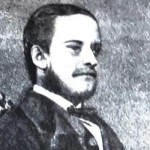
Henry Hover Locke
(1837-83), being an educationist, advocated in favour of an art education where Indian students could be introduced to the basic ideals of European Art. In the year 1864 the School of Industrial Art in Calcutta, was taken over by the government and with the joining of H.H Locke as its principal on June 29, 1864, the institution was soon renamed as the Government School of Art. Being heavily influenced by the European ideals of art making, Locke emphasized on imparting art education in synonymous to the South Kensington School in London, in his newly joined art institution at Calcutta. H. H Locke, retained his position as the principal of Government School of Art in Calcutta until 1882.
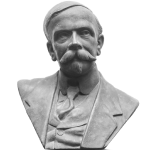
Ernest Binfield Havell
(1861-1934), was an English author, art historian and an influential art administrator. Being a great proponent of Indian art and architecture, he played influential role in reframing the very concept of Art education in India. He was appointed as the superintendent of the Government School of Art, Calcutta in the year 1986. He remained as the principal at the Institution from 1896 to 1905. During his tenure at the Institute, he encouraged an alternative model of art education which was more indigenous and Indian, against the prevalent western school of art training. Along with help of Abanindranath Tagore, E.B Havell advocated in favour of an art education with the aim to revive the Indian Style of Art.

Percy Brown
(1872-1955) was an English art historian, artist, art critic, curator and archaeologist. Being a well renowned art historian and archaeologist, Percy Brown had written extensively on Indian and Buddhist architecture. After serving his tenure as the principal of the Mayo School of Art, Lahore, Percy Brown came to Calcutta and was appointed as the principal at the Government School of Art, Calcutta from 1909 to 1927. During his tenure, Percy Brown advocated in favour of western academic mode of training and art practice in the school at Calcutta. After his retirement from Government School of Art, Calcutta, he was appointed as the secretary and curator of Victoria Memorial Hall in Calcutta, where he held the post until 1947.
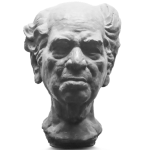
Abanindranath Tagore
(1871-1951) was the pioneering figure in Indian art history to initiate an indigenous visual vocabulary of art at the cusp of the India’s nationalist movement. From 1905 to 1915, Abanindranath Tagore held the position of the Vice Principal at Government School of Art, Calcutta. During his tenure at the school, he persuaded towards developing an Indian vocabulary of art, which later matured into the formation of Bengal School of Art. Abanindranath Tagore along with E.B Havell’s unflinching enthusiasm towards Indian Art, initiated an alternative model of art education in the art school at Calcutta, which encouraged towards developing a visual idiom of art which can be claimed as ‘Indian’ against the prevalent model of western academic realism.
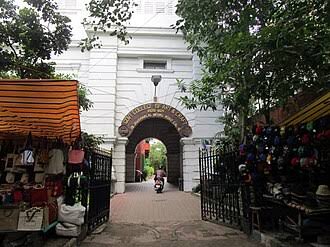
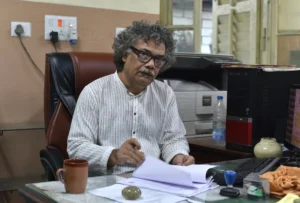
From the Principal's Desk
Every institution that has achieved greatness and glory has inevitably been the motherboard as well as the projection of a thousand dreams.
The Government College of Art & Craft is one such institution that has not only been in the center stage of art pedagogy throughout its long journey but has produced some of the finest artists and thinkers.
Read Full Message